

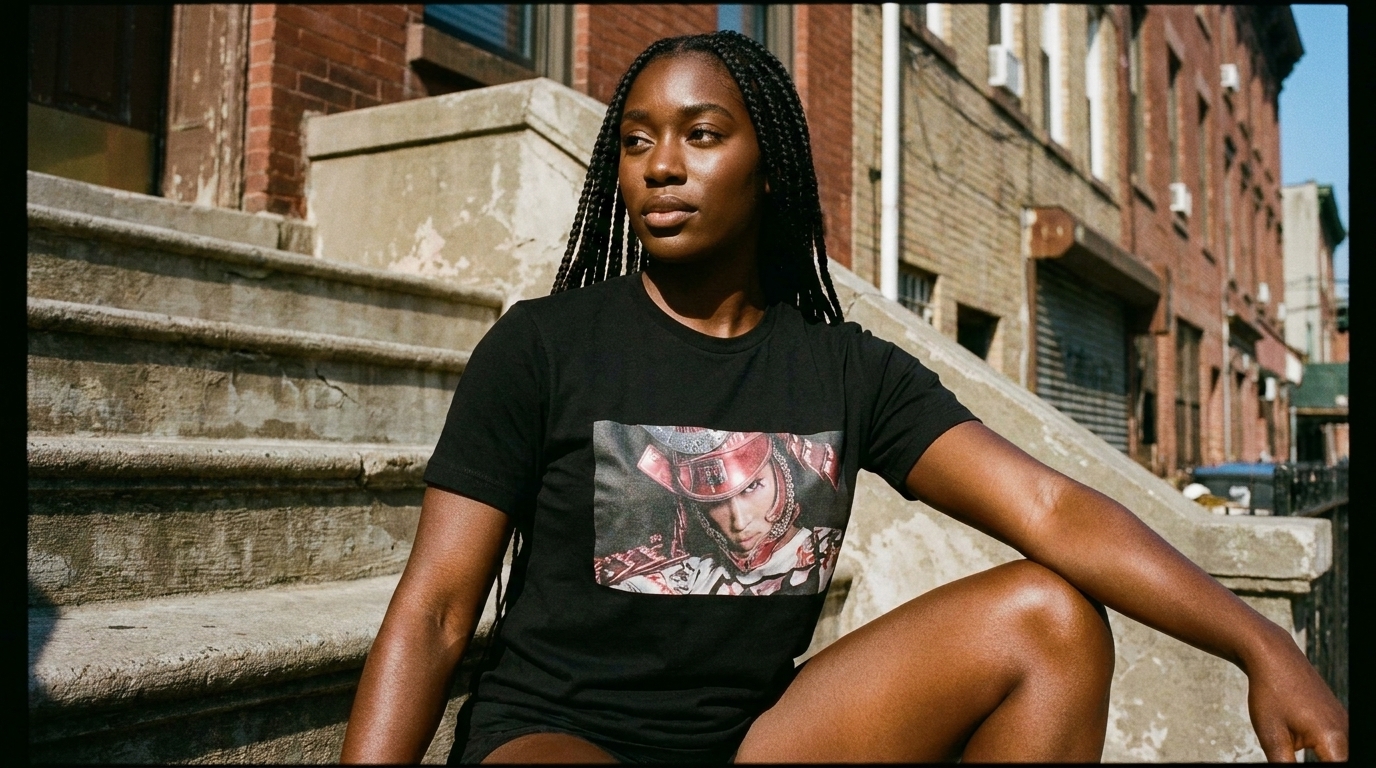
The return of Y2K style is more than a simple nostalgia loop. It’s a revival of a specific cultural moment: the turn of the millennium, when the future felt both excitingly digital and uncertain. This era was defined by a unique blend of technological optimism, cyber-dystopian aesthetics, and a raw, graphic edge rooted in the street culture of the 1990s.
Understanding Y2K aesthetic clothing means looking past fleeting trends to the core ideas that shaped it. It’s about bold graphics, futuristic textures, and silhouettes that embraced a new kind of relaxed confidence. For designers like Olivier Dressen, who came of age as a graffiti artist in the 90s, this visual language isn't retro. It's a foundational part of a lifelong design sensibility that continues to define authentic streetwear today.
Techno-Futurism: Chrome, Cybernetics, and Code
The visual engine of Y2K was techno-futurism. Films and video games of the late 90s and early 2000s were saturated with chrome textures, neon lights, and cyberpunk themes. This wasn't just sci-fi, it was a reflection of culture grappling with the rise of the internet and a digitally mediated world. Streetwear became a canvas for this new reality, translating digital artifacts into wearable graphics.
This is the world that inspires Design Hero's Cyber Samurai series. Pieces like the Shogun X Samurai Tee directly channel this aesthetic with its chrome helm and war-paint textiles. The artwork, created by Olivier Dressen, isn't just a cool image. It’s a piece of world-building that taps into that classic Y2K fusion of traditional warrior iconography with a high-tech future. It reflects a design discipline honed at Brussels' prestigious ENSAV La Cambre, applying classical composition to a subculture obsession.
The key to this style is the tension between the organic and the artificial. The Cyber Lotus Samurai Tee embodies this perfectly, setting hard chrome armor against soft petals. It’s a visual summary of the era’s core conflict: humanity versus the machine, nature versus technology.

The Street-Level Edit: Graffiti and Tattoo Art
While one side of Y2K looked to the digital future, the other was firmly planted on the pavement. The graffiti culture of the 1990s evolved, its bold lettering and characters influencing the graphic design of the new decade. This is the origin of the HERO logo itself, which comes directly from Olivier’s graffiti tag from that era. You can see that history in the simple, impactful design of the Hero Large Organic Tote Bag.
Alongside graffiti, vintage tattoo flash art had a major resurgence in the early 2000s. The bold lines and iconic imagery of 1940s and 50s tattoo culture became a staple of streetwear. The 'I Love You But I Hate You' design stems from this period, an ironic phrase Olivier coined during a turbulent time, rendered in a classic tattoo style. It’s a personal artifact from the era that found its home on pieces like the I Love You But I Hate You Large Organic Tote Bag.
This blend of personal history and subculture is central to the brand's identity. It didn't start in a boardroom, but in the streets and sketchbooks of a working artist. You can read more about that origin in My Story, which details the journey from graffiti tag to brand.

How to Style Y2K Graphics Today
Integrating Y2K pieces into a modern wardrobe is about balance. The era’s silhouettes, particularly the oversized tee, are back in a major way. A piece like the Oversized tie-dye t-shirt provides a perfect foundation. Its relaxed fit and heavyweight cotton feel authentic to the period, while the tie-dye pattern adds a layer of texture that was ubiquitous in Y2K fashion.
The key is to let the graphic piece be the statement. Pair an oversized, graphic-heavy shirt like the Red Viper Samurai Tee with simpler, well-fitting basics. Think clean-lined cargo pants, straight-leg denim, or even tailored trousers for a high-low contrast. This prevents the look from becoming a costume and instead makes it a deliberate nod to the aesthetic.
Accessories play a crucial role. A graphic tote bag serves a dual purpose. It’s a practical item that also extends the visual theme of your outfit. Pairing a cyberpunk tee with a stark, logo-driven tote completes the look without overwhelming it. For more specific ideas, this guide offers a direct look at styling the Cyber-Samurai pieces.

Featured pieces
Frequently asked questions
Are the Design Hero t-shirts unisex?
Yes, all our graphic tees like the Cyber Samurai series use a unisex retail fit. They are designed to be comfortable and flattering for everyone, with side-seamed construction and shoulder-to-shoulder taping for durability.
What material are the eco-friendly tote bags made from?
Our eco tote bags are made from 100% certified organic cotton 3/1 twill. The fabric is durable, with a weight of 8 oz/yd² (272 g/m²), and can handle a weight limit of up to 30lbs (13.6 kg).
Where do the designs on the clothing come from?
All graphics are original artwork by Design Hero founder Olivier 'Hero' Dressen. They are drawn from his personal history as a graffiti artist, his love of comics and cyberpunk, and design motifs he has developed over decades.
How should I care for my graphic tee to protect the print?
To ensure the longevity of the print, we recommend washing the t-shirt inside out with cold water on a gentle cycle. Tumble dry on low, or for best results, hang it to dry. Avoid ironing directly on the graphic.
Wear the Future.
The Cyber Lotus tee blends hard steel and soft petals, a perfect icon of the Y2K aesthetic. Original art by Olivier 'Hero' Dressen.
Get Cyber Lotus Samurai Tee – Cyberpunk Art by Hero · 31.99 USDRelated reading
- How to Style Hero's Cyber-Samurai Streetwear
- My Story
- Anti-Valentine's Gifts: Broken-Heart Tees, Totes & Dark-Romantic Streetwear